Have you ever opened a text message and seen someone write “WTW?” If yes, you may have wondered what those three letters mean. Don’t worry you are not alone. New texting abbreviations appear every year, and it can be hard to keep up.
If you are searching for “WTW mean in text,” this guide is written for you. If you chat with friends, use social media, play online games, or talk to people on dating apps, you will likely come across this abbreviation.
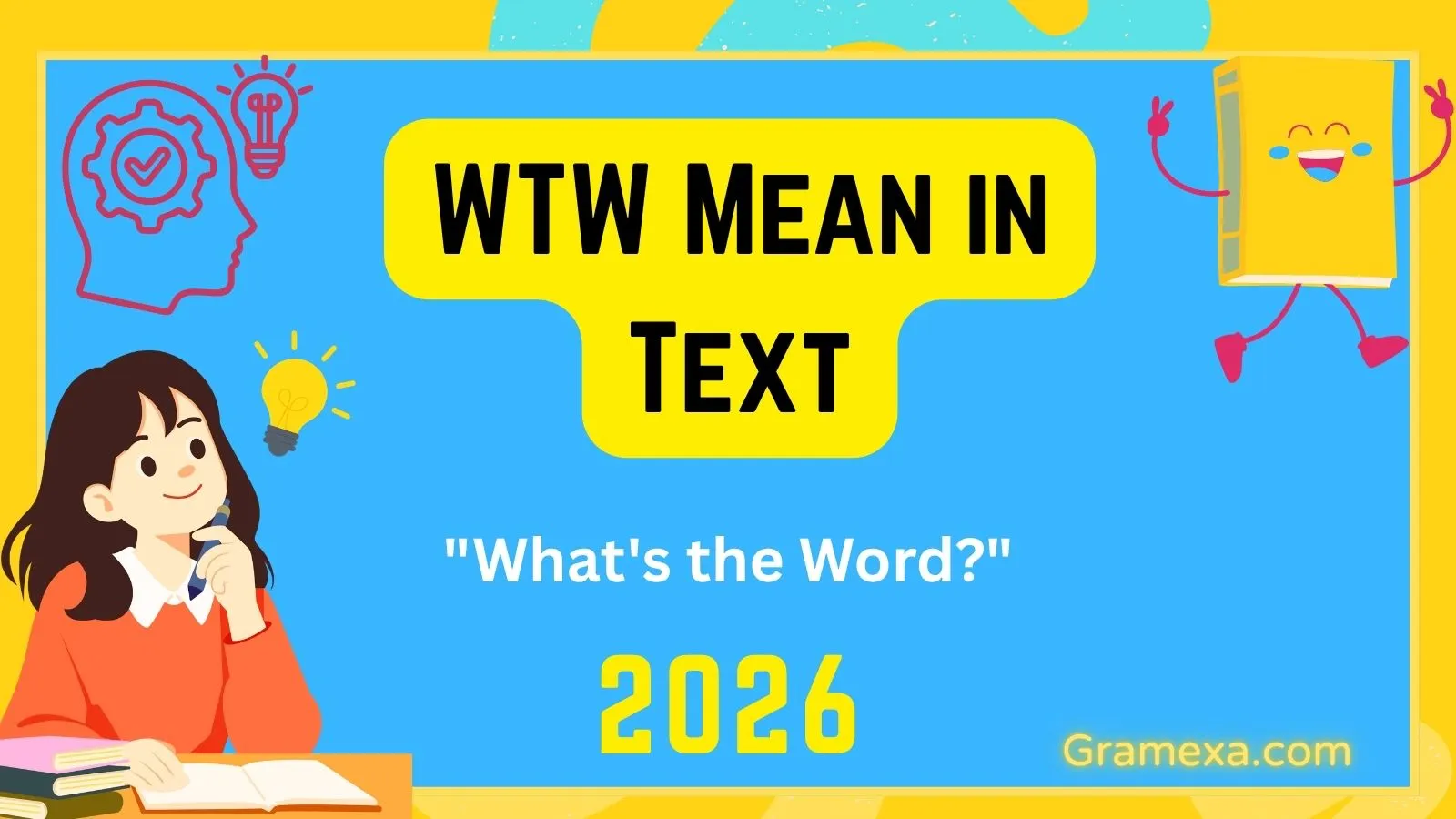
WTW Stands For: “What’s the Word?”
Understanding WTW helps you reply naturally and avoid confusion. The meaning often depends on the conversation, but in most cases, it is simple and friendly.
In this article, you’ll learn what WTW means, where it came from, how people use it, how to respond, and when you should avoid using it. By the end, you’ll feel confident whenever someone sends you a message saying “WTW?”
Let’s Dive In!
Definition & Meaning
WTW most commonly stands for “What’s the Word?”
In modern texting, however, people usually use it to mean:
- What’s up?
- What’s going on?
- What’s the plan?
- What are you doing?
- Want to hang out?
It is a casual way to start a conversation or ask someone about their plans.
Simple Definition
WTW = “What’s the Word?”
The phrase doesn’t literally ask for a word. Instead, it means:
“Tell me what’s happening.”
Example 1
Alex: WTW?
Ben: Nothing much. Just watching Netflix.
Example 2
Emma: WTW tonight?
Sarah: Thinking about going out for dinner.
Example 3
Jake: WTW this weekend?
Chris: Let’s go hiking.
People usually send WTW when they want to:
- Start chatting
- Make weekend plans
- Check if someone is available
- Ask what’s happening
- Break the ice
Because it is short, it saves time while texting.
Background & History
Like many internet abbreviations, WTW became popular with the rise of smartphones, instant messaging, and social media.
Years ago, people typed complete sentences because texting was slower. As texting became faster, users started shortening common phrases.
Examples include
- LOL
- BRB
- IDK
- IMO
- WTW
The phrase “What’s the word?” has existed in spoken English for decades. Friends often used it as another way to ask:
“What’s new?”
When texting apps like:
- Snapchat
- Facebook Messenger
- Twitter (X)
became popular, users shortened it to WTW.
Today, younger generations use it naturally in daily conversations.
It is especially common among:
- Teenagers
- College students
- Gamers
- Social media users
- Dating app users
Although older adults may understand it, it is mostly part of internet slang.
Usage in Various Contexts
WTW changes slightly depending on where it is used.
1. Text Messages
Usually asks what someone is doing.
Friend: WTW?
You: Just relaxing.
2. Social Media
People use it to start conversations.
Instagram DM:
Person A: WTW today?
Person B: Nothing much. You?
3. Gaming
Players use it to ask:
- What’s happening?
- What’s the strategy?
- Who’s online?
Example:
Player 1: WTW?
Player 2: Queue for another match.
4. Weekend Plans
Someone wants to hang out.
Mike: WTW Friday?
Ryan: Let’s watch a movie.
5. Group Chats
WTW often means:
“What are we all doing?”
Example:
Anna: WTW everyone?
Group: Beach trip!
Common Misconceptions & Clarifications
Many people misunderstand WTW.
Misconception 1
WTW always means “What’s up.”
Not exactly.
It can also mean:
- What’s happening?
- What’s the plan?
- What’s new?
Context decides the meaning.
Misconception 2
WTW is rude.
False.
It is simply casual internet slang.
Misconception 3
WTW has only one meaning.
No.
Sometimes people use it differently depending on the conversation.
Misconception 4
It should be used in work emails.
Generally, no.
Professional communication should use complete sentences.
Similar Terms & Alternatives
Many abbreviations have similar meanings.
| Abbreviation | Meaning | Best Used For |
| WTW | What’s the Word? | Plans or conversation |
| WYD | What Are You Doing? | Asking activity |
| WSP | What’s Up? | Greeting |
| SUP | What’s Up? | Casual hello |
| HMU | Hit Me Up | Contact me later |
| YO | Hello | Quick greeting |
Which is Most Common?
- WTW: Plans
- WYD: Current activity
- WSP: Greeting
- HMU: Future conversation
How to Respond to WTW
There are many good replies depending on the situation.
Casual
Friend: WTW?
You: Just chilling.
Friendly
Friend: WTW?
You: Not much. What’s up with you?
Funny
Friend: WTW?
You: Trying to survive Monday!
Interested
Friend: WTW tonight?
You: Got any ideas?
Busy
Friend: WTW?
You: Working right now.
Privacy Conscious
Friend: WTW?
You: Just taking care of a few things.
Regional or Cultural Differences
WTW is mostly used in English speaking countries.
These include
- United States
- Canada
- United Kingdom
- Australia
However, thanks to social media, people worldwide now recognize it.
In countries where English is a second language, younger users often understand WTW because they spend time on:
- TikTok
- Snapchat
- Discord
- Online games
Some regions prefer different slang.
Examples
American English:
WTW?
British English:
You alright?
Australian English:
What’s going on?
Even though the wording changes, the meaning is usually similar.
Comparison with Similar Terms
| Term | Meaning | Usually Asking About | Formal? |
| WTW | What’s the Word | Plans or updates | No |
| WYD | What You Doing | Current activity | No |
| WSP | What’s Up | Greeting | No |
| GM | Good Morning | Greeting | Yes |
| Hello | Greeting | General | Yes |
| How are you? | Well being | Health or mood | Yes |
The biggest difference is that WTW often suggests making plans, while WYD focuses on what someone is doing right now.
Usage in Online Communities & Dating Apps
WTW appears frequently on:
- Tinder
- Bumble
- Snapchat
- Discord
- X (Twitter)
- Facebook Messenger
On dating apps, it often means:
“Are you free?”
Example:
Match: WTW tonight?
Reply: Thinking about getting coffee.
In gaming communities:
Player: WTW?
Reply: Ready for ranking.
Tips
- Reply naturally.
- Keep the conversation going.
- Don’t overthink the abbreviation.
- Match the other person’s tone.
Hidden or Offensive Meanings
The good news is that WTW is generally not offensive.
Most people simply use it to:
- Say hello
- Start chatting
- Ask about plans
However, context matters.
Sometimes someone may use it to start flirting.
Example:
WTW later?
This could mean:
- Want to meet?
- Want to talk?
- Are you free?
It is not inappropriate by itself. The rest of the conversation determines the meaning.
Always consider:
- Tone
- Relationship
- Platform
- Situation
Suitability for Professional Communication
WTW is not recommended for formal communication.
Avoid using it in
- Business emails
- Job applications
- Client meetings
- Academic papers
- Professional reports
Instead, write:
- What are your plans?
- Are you available?
- Do you have any updates?
- How are things going?
- Is there anything new?
Professional Example
Instead of:
WTW?
Write:
Hello, do you have any updates regarding the project?
This sounds much more professional and respectful.
FAQs:
Q1. What does WTW mean in text?
It usually means “What’s the Word?” or simply “What’s up?”
Q2. Is WTW the same as WYD?
No. WTW usually asks about plans or what’s happening, while WYD asks what someone is currently doing.
Q3. Is WTW rude?
No. It is a friendly and casual abbreviation.
Q4. Can WTW be used on Snapchat?
Yes. It is very common on Snapchat, Instagram, and other messaging apps.
Q5. Should I use WTW at work?
Generally, no. Use complete sentences in professional communication.
Q6. Does WTW always mean “What’s the Word?”
Most of the time, yes. However, people often use it to mean “What’s up?” or “What’s the plan?” depending on the context.
Q7. How should I reply to WTW?
Reply based on the situation. You can answer with what you’re doing, share your plans, or ask the other person the same question.
Conclusion:
Understanding what WTW means in text makes online conversations much easier. In most cases, WTW stands for “What’s the Word?” and is simply a friendly way to ask what someone is doing, what’s happening, or If they have any plans.
It is widely used in texting, social media, gaming, and dating apps because it is quick, casual, and easy to type.
While it is perfect for informal conversations, it is not suitable for professional emails or business communication.
The key to understanding WTW is paying attention to the context and the relationship with the sender.
Once you know how people use it, you’ll be able to reply naturally and confidently whenever someone messages you with “WTW?”
Read More Posts
- What Does MBTI Mean in Text? Real Meaning & Examples (2026)
- What Does DWBI Mean in Text? Real Meaning & Examples (2026)
- What Does KMA Mean in Text? Real Meaning & Examples (2026)

I am Grace Murphy a skilled grammar writer from United USA known for creating easy to understand language guides. Through Gramexa.com, I helps readers master grammar with simple and effective explanations.