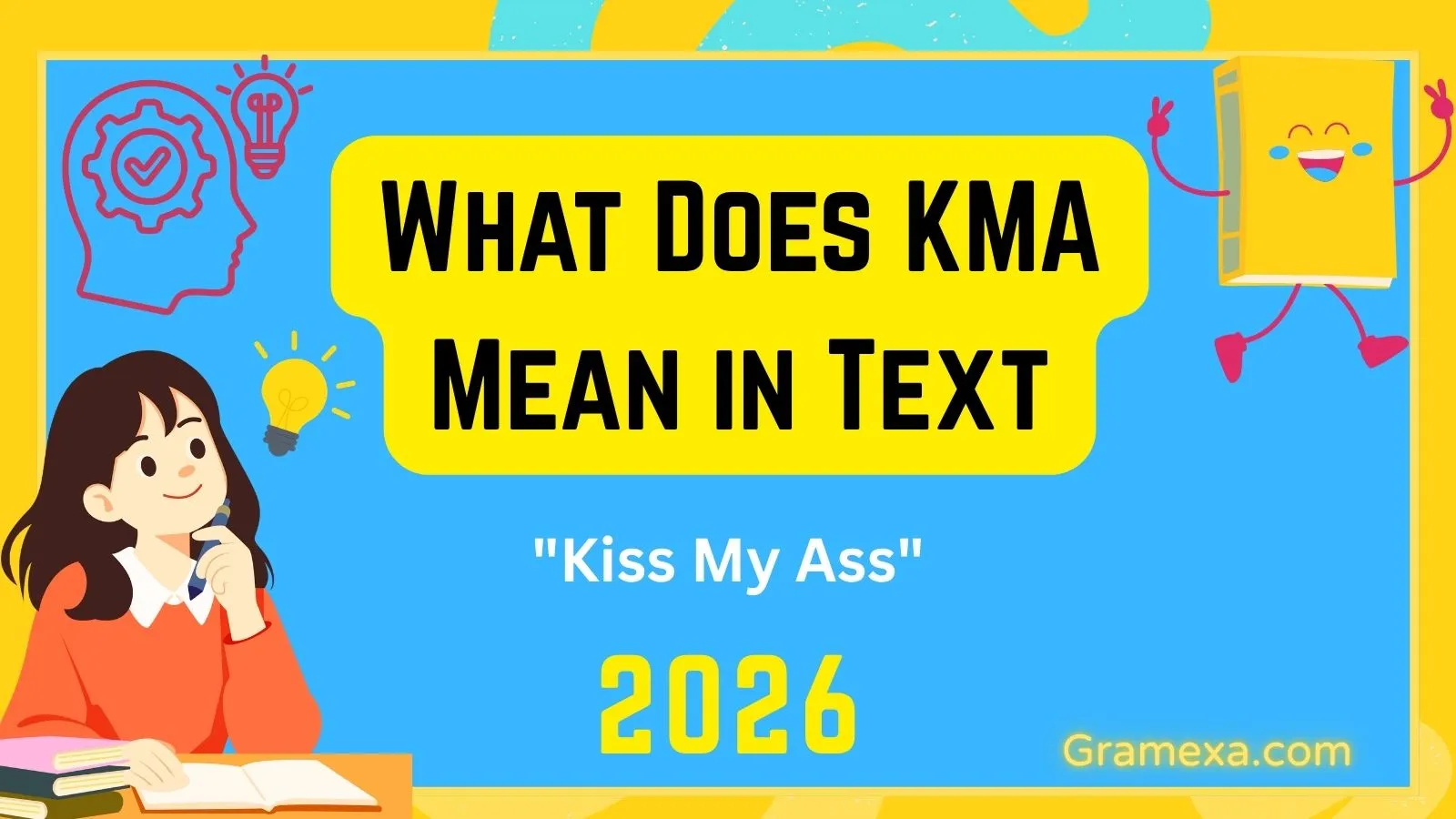
If you have ever received a message with “KMA” and wondered what it means, you are not alone. Text messages, social media, and online games are full of short forms that can be confusing.
Some abbreviations are friendly, while others can sound rude depending on the situation. Understanding what does KMA means in text can help you avoid misunderstandings.
It also helps you know when someone is joking, angry, or simply using internet slang. Today, KMA appears on texting apps, social media platforms, gaming chats, and online forums.
KMA Stands For: “Kiss My Ass”
While it is not as common as abbreviations like LOL or BRB, it still shows up often enough that it is worth knowing.
In this guide, you will learn the meaning of KMA, where it came from, how people use it, when you should avoid it, and how to respond if someone sends it to you.
Let’s Dive In!
Definition & Meaning
The most common meaning of KMA in texting is:
KMA = “Kiss My Ass.”
It is a slang expression that usually tells someone to go away or shows strong frustration, anger, or disrespect.
Although the phrase is short, it carries a powerful emotional tone. Most people use it during arguments or when they are upset.
Simple Definition
KMA is an internet abbreviation for “Kiss My Ass,” which is an informal and often offensive way of rejecting someone or expressing annoyance.
Real Life Examples
Example 1
Alex: “You still owe me $20.”
Ryan: “KMA.”
Here, Ryan is responding rudely.
Example 2
Emma: “Do your homework.”
Jake: “Haha, KMA.”
In this case, Jake may be joking with a close friend, but the phrase is still considered rude.
Example 3
Friend 1: “You lost again!”
Friend 2: “KMA 😂”
The laughing emoji changes the tone and suggests playful teasing.
Can KMA Have Other Meanings?
Yes. While “Kiss My Ass” is the most common meaning in texting, KMA can also stand for different things in business, military, or technical fields.
Examples include:
- Knowledge Management Assessment
- Key Management Authority
- Korea Military Academy
However, these meanings depend entirely on the conversation.
Background & History
The phrase “Kiss My Ass” has existed for many decades. Long before smartphones, people used it as a sarcastic or insulting response during arguments.
As texting became popular in the late 1990s and early 2000s, people began shortening long phrases into abbreviations to save time.
This trend created many internet acronyms, including:
- LOL
- BRB
- IDK
- SMH
- KMA
Unlike positive abbreviations, KMA quickly gained a reputation for expressing anger or defiance.
Today, it appears on:
- Text messages
- Reddit discussions
- Discord servers
- Gaming chats
- Facebook comments
- X (formerly Twitter)
Although younger internet users understand it immediately, many older users may not recognize the abbreviation.
Usage in Various Contexts
KMA is used differently depending on where the conversation happens.
In Text Messages
People may use it when they are annoyed.
Example
Person A: “Stop texting me.”
Person B: “KMA.”
On Social Media
It often appears during online arguments.
Example
User 1: “Your opinion makes no sense.”
User 2: “KMA.”
In Gaming
Competitive games sometimes lead to trash talk.
Example
Player 1: “Easy win!”
Player 2: “KMA.”
Between Close Friends
Sometimes it is only playful.
Example
Friend: “I’m eating your fries.”
You: “KMA 😂”
Here, both friends understand it is a joke.
Common Misconceptions & Clarifications
Many people misunderstand KMA because it has more than one meaning.
Misconception 1
KMA always means something offensive.
Truth: It usually does, but friends sometimes use it humorously.
Misconception 2
It is safe to use with everyone.
Truth: It is not.
Some people may find it disrespectful.
Misconception 3
It only appears in texting.
Truth: It also appears in gaming, forums, memes, and social media.
Misconception 4
KMA always starts a fight.
Not necessarily.
Tone, emojis, and the relationship between people matter.
Similar Terms & Alternatives
Instead of using KMA, people often choose milder expressions.
| Expression | Meaning | |
| Go away | Leave me alone | |
| Leave me alone | Stop bothering me | |
| Whatever | I don’t care | |
| Get lost | Go away | |
| Buzz off | Leave me alone | |
| GTFO | Leave immediately | |
| IDC | I don’t care |
Using polite alternatives helps avoid conflict.
How to Respond to This Term
Your response depends on the situation.
Casual Response
“Okay.”
“No worries.”
“Have a good day.”
Funny Response
“That’s one way to say goodbye 😂”
“Someone woke up grumpy!”
Professional Response
“I think we should keep this conversation respectful.”
“Let’s continue when we’re both calm.”
Privacy Conscious Response
“I’d rather end this conversation.”
“I don’t think this discussion is productive.”
Avoid responding with more insults.
Regional or Cultural Differences
KMA is mostly used in English speaking countries.
It is common in:
- United States
- Canada
- United Kingdom
- Australia
People learning English online may also recognize it.
Some cultures view direct insults as extremely disrespectful. Others may see it as harmless joking among close friends.
Because internet culture spreads quickly, KMA is now understood in many countries, even where English is not the first language.
Comparison with Similar Terms
| Term | Meaning | Tone | Offensive |
| KMA | Kiss My Ass | Angry | High |
| GTFO | Leave now | Very Angry | Very High |
| IDC | I Don’t Care | Neutral | Low |
| Whatever | Indifference | Mild | Low |
| Leave Me Alone | Request for space | Polite | No |
| Buzz Off | Go away | Casual | Medium |
The biggest difference is that KMA is much more insulting than most alternatives.
Usage in Online Communities & Dating Apps
Tinder
Someone might use KMA after an argument or if they want to end a conversation quickly.
X (Twitter)
People sometimes reply with KMA during heated debates.
Users occasionally use it in sarcastic comments.
Discord
Gaming communities may use KMA as part of competitive trash talk.
Gaming
Players often say it after losing or arguing.
Tips
- Do not assume the sender is joking.
- Consider the context.
- Stay calm before replying.
- Avoid escalating the conversation.
Hidden or Offensive Meanings
The primary meaning of KMA is already considered offensive.
There are no widely accepted hidden meanings in everyday texting.
However, context changes everything.
For example:
Friend: “You beat me again! KMA 😂”
This is playful.
But:
Coworker: “KMA.”
This would usually be considered unprofessional and disrespectful.
Always pay attention to:
- Tone
- Emojis
- Relationship
- Situation
Suitability for Professional Communication
KMA should not be used in professional communication.
Avoid using it in
- Emails
- Workplace chats
- Business meetings
- Customer service
- LinkedIn messages
Instead, choose respectful alternatives.
Examples include
- “I disagree.”
- “Let’s discuss this calmly.”
- “I don’t think that’s correct.”
- “Let’s end this conversation respectfully.”
Professional language helps maintain positive relationships.
FAQs:
Q1. What does KMA mean in text?
It usually means “Kiss My Ass,” an informal and often offensive expression.
Q2. Is KMA rude?
Yes. Most people consider it rude or disrespectful.
Q3. Can KMA be used as a joke?
Yes. Close friends sometimes use it playfully, especially with laughing emojis.
Q4. Is KMA appropriate at work?
No. It should never be used in professional communication.
Q5. Does KMA have other meanings?
Yes. In different industries, it can stand for terms like Knowledge Management Assessment or Key Management Authority.
Q6. Should I respond to KMA?
If the conversation is becoming hostile, it is usually best to stay calm or end the discussion politely.
Q7. Is KMA common today?
Yes. Although less common than abbreviations like LOL or OMG, it still appears in texting, gaming, and online discussions.
Conclusion:
Knowing what does KMA means in text helps you understand online conversations more clearly. In most cases, KMA stands for “Kiss My Ass,” making it a slang expression that is often rude or dismissive.
However, the meaning can change depending on the context, relationship between the people involved, and even the use of emojis. While friends may use it jokingly, it is generally inappropriate in professional or formal communication.
If someone sends you KMA, consider the situation before reacting. A calm and respectful response is usually the best choice.
By understanding internet slang like KMA, you can communicate more confidently, avoid misunderstandings, and choose the right words for every conversation.
Read More Posts
- What’s OFC Mean in Text? Meaning With Examples (2026)
- What Does MBTI Mean in Text? Real Meaning & Examples (2026)
- What LMS Mean in Text: Real Meaning With Examples (2026)

I am William Foster experienced English teacher from Ohio who specializes in simplifying grammar for everyday learners. At Gramexa.com, I shares practical tips to help readers write clearly and confidently.