If you have ever received a message that says “ASL?”, you may have wondered what it means. This short form has been around for many years, but people still use it in texting, social media, gaming, and online chats.
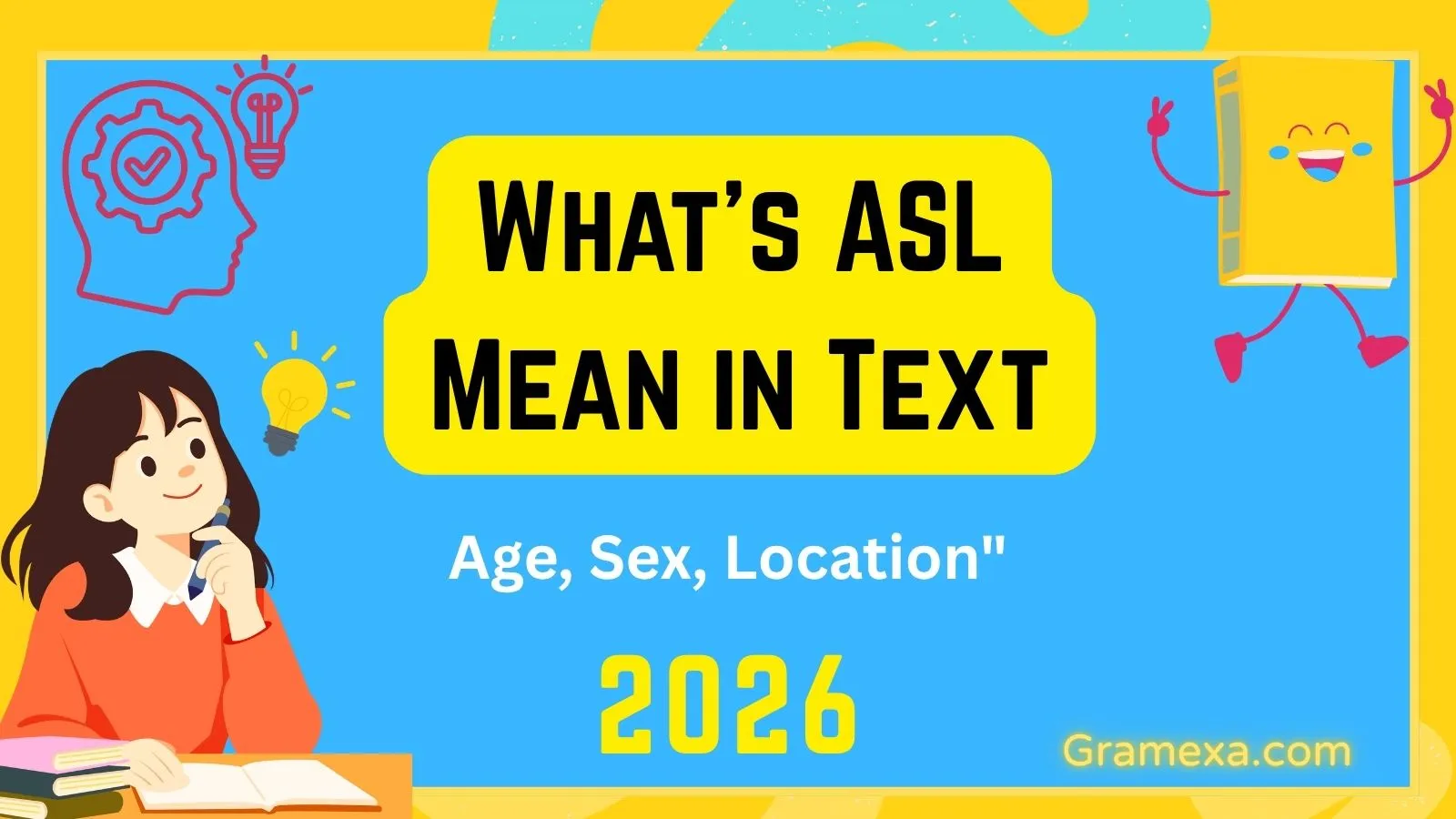
The meaning of ASL depends on the conversation. In most text messages and chat rooms, ASL means “Age, Sex, Location.” It is a quick way to ask someone for basic information. However, in other situations, ASL can also mean American Sign Language, so context is very important.
ASL Stands For “Age, Sex, Location”
Knowing What’s ASL Mean in Text can help you avoid confusion and reply the right way. If you are chatting with friends, meeting new people online, or scrolling through social media, understanding this common internet slang makes communication easier.
In this guide, you’ll learn the meaning of ASL, where it came from, how people use it today, and the best ways to respond.
Let’s Dive In!
What Does ASL Mean in Text?
In texting, ASL usually stands for “Age, Sex, Location.”
People use it to learn three basic facts about someone they are chatting with online.
- Age – How old are you?
- Sex – Are you male or female? (Today, many people simply ask for gender instead.)
- Location – Where do you live?
Years ago, this was one of the most common questions in online chat rooms. Instead of typing three separate questions, people simply wrote “ASL?”
Simple Example
Person A: ASL?
Person B: 22, Female, Texas.
This tells the other person the age, gender, and location in one short reply.
Another Meaning of ASL
Sometimes, ASL means American Sign Language, especially in educational or accessibility discussions.
Example:
Friend: Do you know ASL?
Reply: Yes, I learned American Sign Language last year.
The meaning depends entirely on the conversation.
Background & History
The internet looked very different in the 1990s and early 2000s. People spent hours in online chat rooms, forums, and instant messaging apps.
Back then, strangers often started conversations with one simple question:
“ASL?”
It became popular because it was fast and easy. Instead of asking:
- How old are you?
- Are you male or female?
- Where are you from?
People typed just three letters.
Popular platforms where ASL became common included:
- AOL Chat Rooms
- Yahoo Messenger
- MSN Messenger
- ICQ
Today, ASL is less common than it once was. Many people now value online privacy and prefer not to share personal information immediately.
Still, you can see ASL used in:
- Discord
- Online games
- Dating apps
- Older internet communities
How Is ASL Used in Different Situations?
ASL in Texting
Friends may use it jokingly or when meeting someone new.
Example
Alex: ASL?
Chris: 20, Male, Canada.
ASL on Social Media
Sometimes people ask ASL before starting a conversation.
Example
User 1: Nice profile!
User 2: Thanks!
1st User is : ASL?
ASL in Gaming
Gamers sometimes ask ASL while getting to know teammates.
Example
Player 1: Great game!
Player 2: Thanks.
1st is Player : ASL?
ASL in Casual Conversations
Some people use it simply as an icebreaker.
Example
Friend: Who’s the new member?
Reply: Not sure. Someone already asked ASL.
Common Misconceptions About ASL
Many people misunderstand ASL because it has more than one meaning.
Misconception 1: ASL Always Means Age, Sex, Location
Not true.
In schools, workplaces, and accessibility discussions, it often means American Sign Language.
Misconception 2: Everyone Knows ASL
Many younger users have never seen this abbreviation because it is less popular today.
Misconception 3: ASL Is Always Appropriate
Not always.
Asking someone’s age, gender, and location too early can make people uncomfortable.
Similar Terms and Alternatives
Instead of asking ASL, many people now ask separate questions.
| Term | Meaning | When Used |
| ASL | Age, Sex, Location | Online chats |
| A/S/L | Same meaning | Older chat rooms |
| Where are you from? | Location only | Casual chat |
| How old are you? | Age only | Friendly conversations |
| Tell me about yourself | General introduction | Social media and dating |
Modern users often prefer full questions because they sound more natural.
How to Respond to ASL
There are many ways to answer depending on your comfort level.
Casual Response
Person: ASL?
You: 24, Male, New York.
Funny Response
Person: ASL?
You: Old enough to pay bills, human, Earth.
Privacy Conscious Response
Person: ASL?
You: I’d rather get to know each other first.
Professional Response
Person: ASL?
You: I prefer not to share personal information online.
Regional And Cultural Differences
ASL is recognized in many English-speaking countries, including:
- United States
- Canada
- United Kingdom
- Australia
However, its popularity has decreased.
In many countries, people now ask:
- Where are you from?
- What’s your age?
- Which country do you live in?
Instead of using the abbreviation.
In some cultures, asking someone’s age or gender immediately may seem rude.
ASL Compared With Similar Internet Terms
| Term | Meaning | Main Purpose |
| ASL | Age, Sex, Location | Learn basic personal details |
| WYD | What You Doing? | Start conversation |
| HMU | Hit Me Up | Invite someone to message |
| BRB | Be Right Back | Temporary absence |
| IDK | I Don’t Know | Express uncertainty |
| IMO | In My Opinion | Share an opinion |
| TTYL | Talk To You Later | End conversation |
Each abbreviation serves a different purpose.
ASL on Dating Apps and Online Communities
Although less common today, some users still ask ASL on:
- Tinder
- Discord
- Gaming communities
- Anonymous chat apps
Example
User: ASL?
Reply: I’m 25 and from Chicago. I’d rather not share more yet.
Tips
- Never feel pressured to answer.
- Share only what you are comfortable sharing.
- Be careful when chatting with strangers.
- Protect your personal information.
Hidden or Offensive Meanings
ASL itself is not an offensive abbreviation.
However, problems can happen depending on how people use it. Some users ask ASL only to collect personal information quickly.
Others may use it before sending unwanted messages. That is why many people choose not to answer immediately.
Always consider:
- Who is asking?
- Why are they asking?
- Do you trust them?
Appropriate for Professional Communication
Generally, no.
ASL is internet slang and does not fit formal business communication.
Instead, use professional questions like:
- May I know your location?
- Could you introduce yourself?
- Would you mind sharing your background?
Professional language creates a better impression.
Reserve ASL for casual conversations.
FAQs:
Q1.What does ASL mean in text?
It usually means Age, Sex, Location.
Q2.Does ASL always mean Age, Sex, Location?
No. It can also mean American Sign Language.
Q3.Is ASL still popular?
It is less common today but still appears in gaming, chat rooms, and some social media platforms.
Q4.Should I answer ASL?
Only if you feel comfortable sharing personal information.
Q5.Is ASL rude?
Not necessarily. However, asking for personal details too soon may seem uncomfortable to some people.
Q6.Is ASL used on dating apps?
Yes. Some users still ask ASL when meeting someone online.
Q7.Why does ASL have two meanings?
One meaning comes from internet slang, while the other refers to American Sign Language. The conversation usually makes the intended meaning clear.
Conclusion:
ASL is one of the oldest internet abbreviations still seen online today. In most text messages, it means Age, Sex, Location, while in education and accessibility discussions, it often refers to American Sign Language. The correct meaning depends on the context.
Although ASL was extremely popular in early chat rooms, many people now prefer asking full questions or keeping personal details private.
If someone sends you“ASL?”, think about who is asking and decide how much information you want to share.
Understanding both meanings helps you avoid confusion, communicate confidently, and stay safe while chatting online.
As internet language continues to evolve, knowing classic abbreviations like ASL remains useful for texting, gaming, social media, and online conversations.
Read More Posts
- What’s OFC Mean in Text? Meaning With Examples (2026)
- What Does DWBI Mean in Text? Real Meaning & Examples (2026)
- What LMS Mean in Text: Real Meaning With Examples (2026)

I am Grace Murphy a skilled grammar writer from United USA known for creating easy to understand language guides. Through Gramexa.com, I helps readers master grammar with simple and effective explanations.