Have your social media posts suddenly stopped getting views, likes, or comments? You may have heard someone say, “I think my account is shadow banned.” But what does that really mean?
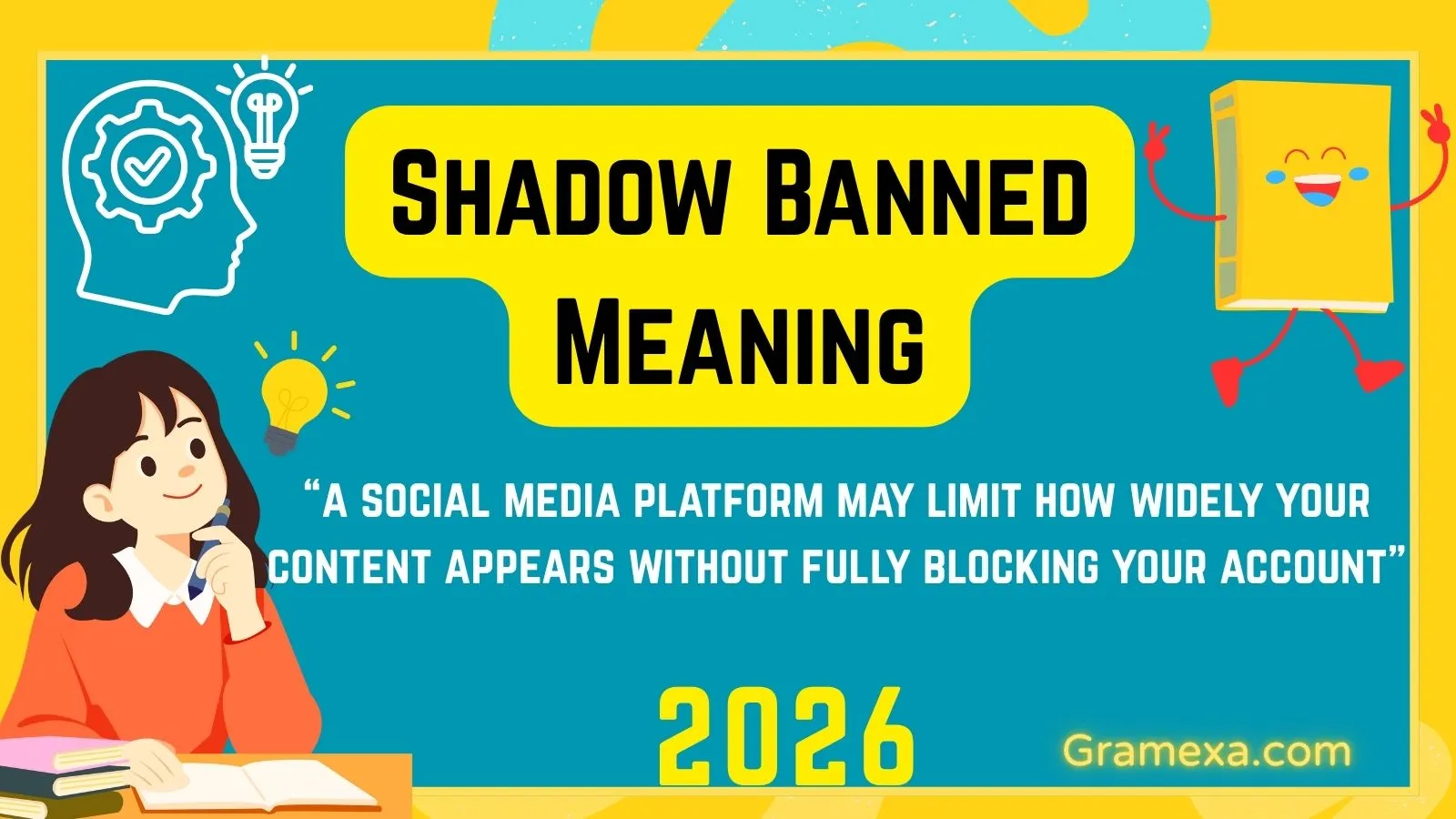
The shadow banned meaning is simple: a social media platform may limit how widely your content appears without fully blocking your account. Your posts may still be visible to you and some followers, but they may show up less often in search, hashtags, recommendations, or feeds.
That does not always mean you are shadow banned. A drop in reach can happen for many reasons, including lower engagement, changes to a platform’s ranking system, content filters, or normal changes in audience behavior.
This guide explains what shadow banning means, the common signs, possible causes, how to check your account, and what you can do next.
Let’s Find Out More!
Quick Answer
Shadow banned means your social media content may have reduced visibility without your account being fully suspended or blocked.
For example, you might post normally, but your content may stop appearing in searches, hashtags, recommendations, or discovery areas.
The term is widely used online, but platforms do not always use “shadow ban” as an official label. In many cases, platforms describe the issue with terms such as content eligibility, search filtering, recommendation limits, or visibility restrictions.
So, a sudden drop in reach does not prove that you have been shadow banned.
Definition & Meaning
The shadow banned meaning refers to a situation where a platform appears to reduce the visibility of an account or its content without giving the user a normal account suspension.
Think of it this way:
Normal account restriction:
You receive a clear warning or notice that something is wrong.
Shadow-ban-like visibility problem:
Your account still works, but fewer people may discover your content.
The important point is that social media platforms use complex systems to rank, filter, and recommend content. A post can have low visibility without the platform placing a formal “shadow ban” on the account.
For example, X says some content may not appear in search because its systems filter content to improve search quality.
It also says repeated duplicate posts, aggressive follow and unfollow activity, automated posts, and hashtag abuse can lead to search filtering.
TikTok also says that content that is not suitable for a broad audience may become ineligible for the For You feed and may become harder to find in search.
This is why it is better to think of “shadow banned” as a common user term rather than assume every reach drop means a secret account ban.
What Does Shadow Banned Mean on Social Media?
On social media, shadow banning usually describes reduced organic visibility.
Your account may still let you:
- Post content
- Like posts
- Comment
- Follow people
- Receive some engagement
- View your own content
But your content may get less exposure than before.
The exact effect can differ by platform.
On X, for example, search uses ranking and filtering systems. X says search results consider factors such as relevance, engagement, health, and other signals. It also says some accounts or posts can be filtered from search.
On TikTok, content can be made ineligible for the For You feed when it does not meet the platform’s requirements for broad recommendation.
So, there is no single form of shadow banning that works the same way everywhere.
Common Signs of a Shadow Ban
A sudden change in reach can feel confusing. Here are signs worth checking.
1. Your Reach Drops Suddenly
One of the most noticeable signs is a sharp drop in impressions or views.
For example, you may normally receive steady views, then suddenly receive far fewer views from people who do not follow you.
However, a reach drop alone does not prove a shadow ban.
Your content topic, timing, audience interest, competition, and platform algorithm can also affect reach.
2. Your Posts Stop Appearing in Search
Search visibility can be another clue.
If your public post normally appears when you search for a unique phrase, but suddenly does not appear, something may have changed.
Still, search systems do not always show every post.
X, for example, explains that its search system filters content and ranks results based on several signals.
3. Hashtag Reach Falls
Some creators notice that their posts receive little or no traffic from hashtags.
This can happen when a platform limits discovery or when the hashtag itself has low activity.
Do not assume a hashtag problem means your whole account has been restricted.
4. Fewer Non-Follower Views
Look at where your views come from.
If your followers still see your content but new users almost never discover it, that may point to a recommendation or search visibility issue.
This distinction matters because platforms often treat follower feeds and discovery systems differently.
5. Your Content Is Still Visible to You
A common source of confusion is that you can see your own post normally.
That does not tell you how widely other people can see it.
A post can remain visible on your profile while receiving limited exposure in search or recommendation systems.
What Causes a Shadow Ban?
There is no single cause.
Different platforms use different rules and ranking systems. Some common reasons for reduced visibility include the following.
Spam-Like Activity
Posting the same message again and again can look like spam.
X specifically warns against repeatedly posting duplicate or near-duplicate content. It also warns against automated posts and posting similar messages across multiple accounts.
If you run several accounts, avoid copying the same content across all of them.
Aggressive Follow and Unfollow Activity
Rapid follow and unfollow behavior can look unnatural.
X lists aggressive follow and unfollow activity among behaviors that can lead to search filtering or other action.
Normal account growth is different from trying to gain followers through large bursts of automated activity.
Hashtag Abuse
Using large numbers of unrelated hashtags can make content look spammy.
Using a hashtag simply because it is trending may also fail if the post has nothing useful to add to that topic.
X advises users not to abuse trending topics or hashtags.
Content That Is Not Eligible for Recommendations
A post can remain online but still receive limited recommendation.
TikTok explains that some content may be ineligible for the For You feed when it is not suitable for a broad audience. It may also become harder to find in search.
This is an important difference.
Content being online does not always mean it is eligible for every recommendation surface.
Sensitive Content Filters
Some platforms have filters that affect what users see.
X, for example, says its safe search settings can exclude potentially sensitive content from search results.
That means another person’s search settings can sometimes affect if they see certain content.
Shadow Ban vs. Normal Low Reach
Not every low-view post is a shadow ban.
Social platforms rank content. A post may receive fewer views simply because other posts perform better or because the topic has less interest at that moment.
X explains that its Top search results use signals such as relevance and popularity.
This makes an important point:
Low reach is a result. It is not automatically proof of a shadow ban.
| Situation | What It May Mean | What to Do |
| Views drop on one post | Normal performance change | Compare with other posts |
| All discovery traffic falls | Possible visibility issue | Check account and content status |
| Posts disappear from search | Search filtering may apply | Check search rules and settings |
| Followers still see posts | Discovery may be weaker | Review recommendation eligibility |
| Account receives a clear warning | Formal restriction may exist | Read the platform notice |
| Duplicate posts perform poorly | Spam signals may affect visibility | Post original content |
How to Check If You Are Shadow Banned
There is no universal shadow-ban test.
Instead, use several checks.
Check Your Account Status
Start with the platform’s own account or content-status tools if they are available.
Look for:
- Policy warnings
- Removed content
- Recommendation restrictions
- Search restrictions
- Content eligibility notices
- Community guideline issues
This is much more useful than relying on a random “shadow ban checker” website.
Test a Unique Post
Create a normal post with a phrase that is unlikely to have many competing results.
Then check if it appears in the relevant search area from another account or logged-out view, when the platform allows it.
Do not spam the same test.
Compare Followers and Non-Followers
Your analytics can help you understand the problem.
Ask:
- Are followers still seeing my posts?
- Did non-follower reach fall?
- Did search traffic disappear?
- Did recommendation traffic fall?
- Did engagement fall before reach dropped?
These questions can reveal if the problem is visibility, content performance, or audience interest.
Check More Than One Post
Never judge your account from one post.
Look at several recent posts and compare them with your normal performance. A single weak post can happen for many reasons.
How to Fix a Shadow Ban
If you believe your visibility has been limited, focus on healthy account behavior.
Stop Spam Like Actions
Avoid:
- Repeated copy-paste posts
- Mass follow and unfollow activity
- Automated replies
- Unrelated hashtags
- Repeated links
- Duplicate content across accounts
X specifically lists several of these behaviors as reasons content or accounts may be filtered from search.
Review Recent Content
Look through your recent posts.
Ask if any content may violate the platform’s rules or recommendation standards.
If you find a clear problem, stop repeating it.
Use Original Content
Give people a reason to interact with your posts.
Add your own:
- Experience
- Opinion
- Explanation
- Images
- Examples
- Helpful information
Original content also makes your account feel more natural.
Avoid Trying to “Beat” the Algorithm
Many creators make the mistake of changing everything at once.
They change hashtags, usernames, posting times, captions, topics, and profile details all at the same time.
That makes the problem harder to understand.
Instead, make small changes and watch what happens.
Use Official Appeals or Support
If the platform gives you an appeal option, use it.
Explain the issue clearly. Avoid emotional claims such as “you secretly banned me.”
Instead, describe what changed and ask if your account or content has a visibility restriction.
What Not to Do
When reach drops, panic can make things worse.
Do not immediately:
- Create several new accounts
- Buy followers
- Buy engagement
- Use bots
- Post the same content repeatedly
- Stuff posts with hashtags
- Delete your entire profile
- Trust every shadow-ban checker online
These actions may create more problems instead of solving the original one.
The better approach is simple: check the platform’s rules, review your content, reduce spam-like behavior, and monitor your results.
Shadow Ban Meaning: Quick Reference
| Check | If You See This | Best Next Step |
| Account status | Warning or restriction | Review the notice |
| Search | Posts missing | Check search filters and rules |
| Recommendations | Discovery falls | Review content eligibility |
| Followers | Normal reach | Problem may be discovery-related |
| Non-followers | Sharp decline | Review recommendation signals |
| Content | Similar or repeated posts | Create more original content |
| Engagement | Drops across all posts | Review topic and audience fit |
Does a Shadow Ban Last Forever?
Usually, you should not assume that a visibility problem is permanent.
The duration of any restriction depends on the platform, the reason for the restriction, and the account’s situation.
More importantly, the term “shadow ban” covers many different problems.
One creator may face a search filter. Another may have content that is not eligible for recommendations. Someone else may simply have a normal reach decline.
That is why there is no reliable universal answer such as “a shadow ban lasts exactly seven days.”
Be careful with websites or social posts that promise an exact recovery time without knowing what caused the visibility problem.
Is Shadow Banning the Same as Being Banned?
No.
A normal ban or suspension usually involves a clear account-level restriction. A shadow-ban-like issue is usually described as reduced visibility.
You may still be able to use your account while receiving less exposure in certain areas.
X provides a useful example. It says accounts filtered from search may still deliver updates to followers, and replies or mentions can still reach specific users.
So, visibility restriction and account suspension are not the same thing.
Why Your Views Can Drop Without a Shadow Ban
This is one of the most important things to understand.
Your views can fall because:
- Your topic has less demand
- Your followers are less active
- Your post gets weak early engagement
- Your content competes with stronger posts
- Your posting time changes
- Your audience changes
- The platform changes how it ranks content
- Your content is less relevant to the people seeing it
X says its recommendation systems use many signals, including accounts and topics people follow, likes, reposts, replies, media watched, and activity within a user’s network.
So a reach drop can come from normal ranking behavior.
That is why you should look for evidence before calling it a shadow ban.
How to Avoid Future Visibility Problems
The safest strategy is to build an account that looks and behaves like a real person or real brand.
Post useful content.
Avoid automation that creates repetitive behavior.
Use hashtags only when they fit the post.
Do not manipulate engagement.
Follow platform rules.
Keep your profile complete and authentic.
On X, for example, the platform says account search gives preference to profiles with complete names, usernames, and bios, and it recommends regular activity to keep search results up to date.
Most importantly, do not chase every algorithm rumor.
Platforms change. Features change. Ranking systems change.
Good content and healthy account behavior are more reliable than trying to find a secret trick.
FAQs:
Q1. What does shadow banned mean?
Shadow banned means an account or its content appears to have reduced visibility without a normal full account suspension. The content may still be visible to the creator or followers but may receive less exposure through search, recommendations, or discovery.
Q2. How do I know if I am shadow banned?
There is no universal test. Check your account status, content eligibility, search visibility, and analytics. Compare follower and non-follower reach across several posts instead of relying on one low-view post.
Q3. Can a shadow ban be removed?
If your reduced visibility comes from a platform restriction, following the platform’s rules and using its appeal or support process may help. The exact process depends on the platform and the reason for the restriction.
Q4. Is low engagement proof of a shadow ban?
No. Low engagement alone does not prove a shadow ban. Content quality, audience interest, competition, timing, and recommendation systems can all affect your reach.
Q5. Does deleting posts fix a shadow ban?
Not necessarily. Deleting posts is not a universal fix. First find out if you actually have a restriction. If you remove content, do so because it violates a rule or no longer fits your account strategy, not because a random website told you to.
Q6. Can hashtags cause a shadow ban?
Hashtags can affect visibility when they are used in spammy, misleading, or abusive ways, but using hashtags does not automatically mean your account will be shadow banned. X specifically warns against abusing trending topics or hashtags.
Q7. How long does a shadow ban last?
There is no universal time limit. A visibility issue may depend on the platform, the type of restriction, and the account’s situation. Avoid claims that every shadow ban lasts a fixed number of days.
Conclusion
The shadow banned meaning is best understood as reduced social media visibility without a normal full account suspension.
Your posts may still exist, but fewer people may discover them through search, recommendations, hashtags, or other discovery systems.
Still, a reach drop does not prove a shadow ban. Check your account status, compare several posts, review your content, and look at follower versus non-follower reach.
Avoid spam, automation, duplicate posts, and hashtag abuse. Most of all, use the platform’s own tools and policies as your first source of truth.
If you treat visibility problems like a problem to investigate not a rumor to fear you have a much better chance of finding the real cause and fixing it.

I am Grace Murphy a skilled grammar writer from United USA known for creating easy to understand language guides. Through Gramexa.com, I helps readers master grammar with simple and effective explanations.