Have you ever met someone who seems impossible to impress? Maybe they act bored even when something exciting happens. That feeling is often described by the word blase.
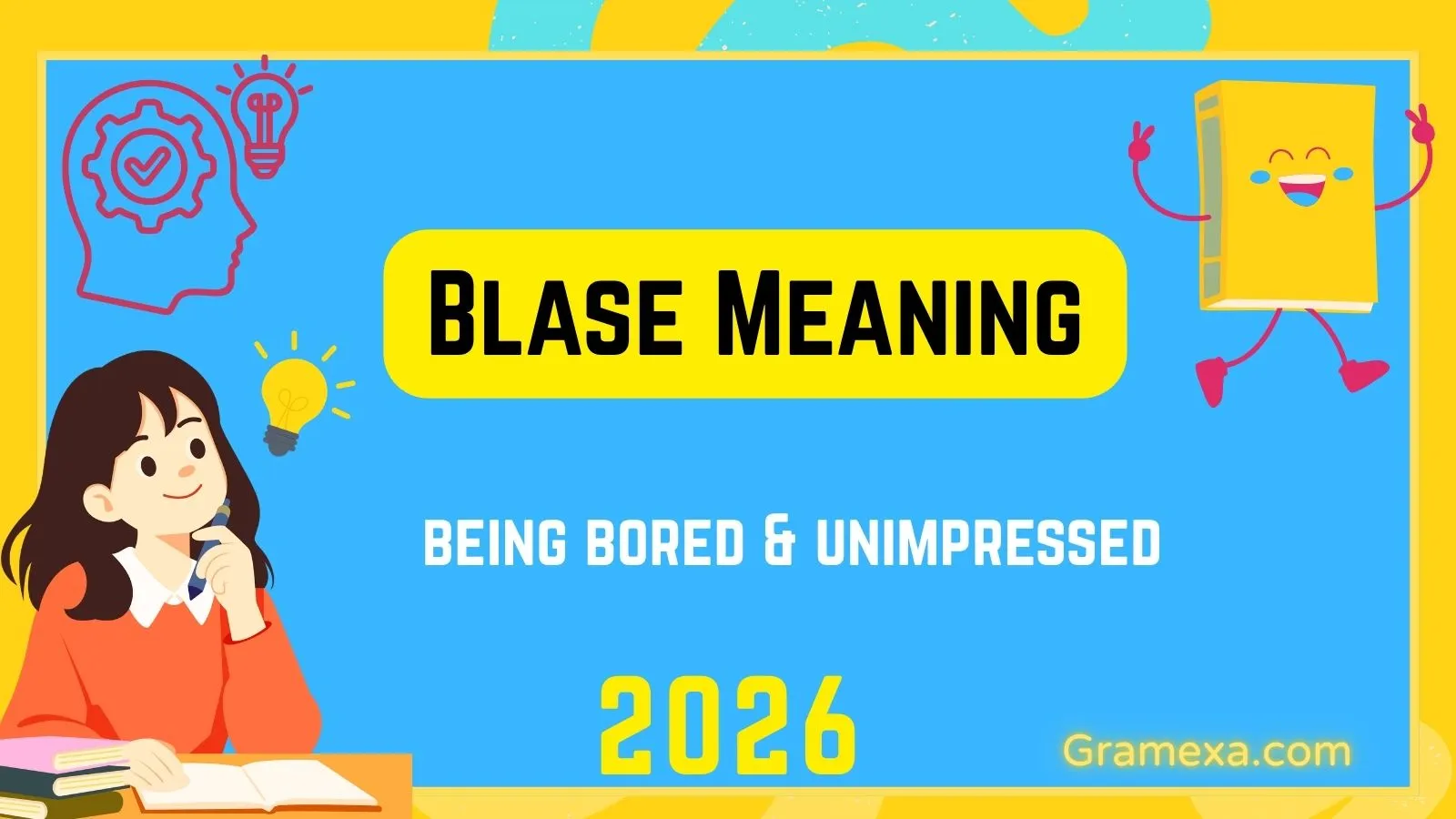
The blase meaning is being bored, unimpressed, or no longer excited because you have experienced something too many times.
It usually describes a person who has become so familiar with exciting things that they no longer react with interest.
Blase Meaning: Being bored & Unimpressed
In this guide, you’ll learn the exact definition of blase, how to pronounce it, where it came from, when to use it, common mistakes to avoid, and plenty of real-life examples.
By the end, you’ll know how to use this word naturally in both speaking and writing.
Let’s Find Out More!
Quick Answer
Blase (pronounced blah-ZAY) is an adjective that describes someone who is unimpressed, indifferent, or bored because they have seen or experienced too much of something.
Simple Definition
A blase person does not show much excitement because new experiences no longer seem special.
Easy Examples
- She looked blase during the concert because she had attended many before.
- After years of traveling, he became blase about luxury hotels.
- The famous actor seemed blase about winning another award.
In each example, the person is not excited, even though others probably would be.
What Does Blase Mean in Everyday English?
In everyday English, blase describes a person who has become too familiar with exciting things. Instead of feeling amazed, happy, or surprised, they react with little or no emotion.
Think about someone who eats at expensive restaurants every week. The first visit may feel exciting. After many visits, those meals may no longer seem special. That person might become blase about fine dining.
The word often suggests that too much experience has reduced a person’s excitement.
Everyday Situations
Someone may seem blase if they:
- Travel around the world often.
- Meet famous people regularly.
- Own many luxury items.
- Win awards every year.
- Experience exciting events every week.
The key idea is overfamiliarity. The excitement disappears because the experience has become normal.
How to Pronounce Blase
Many English learners are unsure how to say this word because it comes from French.
Pronunciation
Blase is pronounced:
blah-ZAY
The second syllable receives the strongest stress.
Pronunciation Tips
- Say “blah” first.
- Finish with “ZAY.”
- Keep the ending smooth.
You can practice by saying:
“She sounded blah-ZAY during the interview.”
After a few tries, the pronunciation becomes natural.
Where Does the Word Blase Come From?
The word blase comes from the French word blasé, which means bored from having too much of something.
English adopted the word during the 1800s, and it still carries nearly the same meaning today.
Originally, it described people who had experienced so much pleasure, luxury, or entertainment that nothing felt exciting anymore.
Over time, English speakers began using blase in many situations, not just luxury lifestyles.
Today, it can describe anyone who seems emotionally unaffected because they have become too familiar with something.
When Should You Use the Word Blase?
Use blase when someone reacts without excitement to something that most people would find interesting or enjoyable.
For example:
- A travel blogger who has visited 80 countries may become blase about airports.
- A movie critic may seem blase after watching hundreds of films.
- A professional athlete may become blase about large crowds.
The word often appears when talking about:
- Everyday conversations
- Books
- News articles
- Magazine writing
- Business writing
- Personal descriptions
- Reviews
- Social media posts
It adds a more precise meaning than simply saying someone is “bored.”
Instead, it explains why they are bored they have experienced something so often that it no longer feels new.
Blase vs. Bored: Are They the Same?
Many people think blase and bored mean exactly the same thing, but there is an important difference.
A person can feel bored because there is nothing to do.
A person is blase because they have already experienced something so many times that it no longer excites them.
| Word | Meaning | Example |
| Bored | Nothing interesting is happening. | The meeting was boring, so everyone felt bored. |
| Blase | Too much experience has removed the excitement. | She seemed blase after attending dozens of fashion shows. |
This small difference helps you choose the right word in different situations.
How to Use Blase in a Sentence
The word blase is an adjective. It describes a person, attitude, expression, or reaction.
Basic Sentence Pattern
Subject + be + blase + about + noun
Examples:
- She was blase about the promotion.
- He became blase about flying after years of business travel.
- They seemed blase about celebrity events.
- The model looked blase during the fashion show.
- My friend is blase about expensive cars because his family owns several.
You can also use blase before a noun.
Examples:
- His blase attitude surprised everyone.
- She gave a blase smile after hearing the news.
- The actor had a blase expression during the interview.
The word usually describes people, but it can also describe the way someone behaves.
Real-Life Examples of Blase
Here are some everyday situations where blase fits naturally.
At School
A student who wins many science competitions may become blase about receiving another trophy.
Example:
Emma looked blase when she accepted another first place award.
At Work
An employee who gets praised every week may stop reacting with excitement.
Example:
Mark sounded blase after hearing he had earned another bonus.
During Travel (Blase Meaning)
Someone who flies every week may stop enjoying airports or airplane trips.
Example:
After ten years of international travel, she became blase about first-class flights.
On Social Media
Influencers often receive thousands of compliments every day.
Example:
He seemed blase about reaching another million followers.
In Daily Life
Owning many luxury items can make new purchases feel less exciting.
Example:
The millionaire appeared blase about buying another sports car.
More Example Sentences
These examples show different ways to use blase correctly.
- My cousin is blase about expensive watches.
- She gave a blase response to the exciting announcement.
- After visiting Paris several times, he became blase about famous landmarks.
- The singer looked blase during the award ceremony.
- I expected him to be thrilled, but he acted blase.
- Years of success made the athlete seem blase about winning medals.
- Her blase attitude confused the rest of the team.
- They were blase about staying in a five-star hotel.
- The children were excited, but their older brother remained blase.
- The journalist sounded blase after interviewing many world leaders.
Common Situations Where People Use “Blase”
You may hear this word in conversations about:
- Luxury lifestyles
- Wealth
- Fashion
- Business success
- Travel
- Celebrities
- Sports
- Entertainment
- Education
- Fine dining
- Art
- Social status
It often describes people who have experienced more than the average person, making exciting events seem ordinary.
Synonyms of Blase
Several English words have meanings close to blase, although each has a slightly different use.
- Unimpressed
- Indifferent
- Uninterested
- Apathetic
- Detached
- World-weary
- Nonchalant
- Jaded
- Unenthusiastic
- Casual
- Emotionless
- Cool
- Disinterested (in some contexts)
- Weary
- Unresponsive
Example
Instead of saying:
She looked blase.
You could also say:
She looked unimpressed.
or
She looked jaded.
The best choice depends on the situation and the feeling you want to express.
Antonyms of Blase
These words express the opposite idea.
- Excited
- Enthusiastic
- Amazed
- Interested
- Curious
- Passionate
- Energetic
- Inspired
- Delighted
- Thrilled
- Impressed
- Eager
- Joyful
- Fascinated
- Amazed
Example
Instead of a blase reaction:
She was thrilled to receive the award.
This sentence shows excitement instead of indifference.
Common Mistakes People Make
Many English learners confuse blase with other words. Understanding these differences will help you use it correctly.
| Common Mistake | Correct Usage |
| Using blase to mean simply “lazy.” | Blase means unimpressed because of too much experience, not unwilling to work. |
| Using blase for every bored person. | Someone is blase only when repeated experience has removed the excitement. |
| Pronouncing it as “blaze.” | The correct pronunciation is blah-ZAY. |
| Using it as a verb. | Blase is an adjective, not a verb. |
| Thinking it always has a negative meaning. | It often suggests indifference, but sometimes it simply describes emotional familiarity with something. |
This distinction makes your English sound more accurate and natural.
Blase vs. Jaded
These two words are similar, but they are not identical.
Blase focuses on losing excitement because of repeated experience.
Jaded often suggests someone has become emotionally tired, worn out, or exhausted after too many experiences or disappointments.
Example
Blase
She was blase about luxury vacations because she traveled every month.
Jaded
He felt jaded after years of working without taking a break.
A blase person may simply seem hard to impress.
A jaded person often feels emotionally drained.
Blase vs. Indifferent
These words are also close in meaning.
A person who is indifferent simply does not care.
A person who is blase does not show excitement because they have already experienced similar things many times.
Example
- He was indifferent to the discussion because it did not interest him.
- He was blase about the announcement because he had heard similar news many times.
Understanding this difference helps you choose the most accurate word in conversations and writing.
Famous Quotes and Literary Use of Blase
The word blase often appears in novels, magazines, newspapers, and interviews. Writers use it to show that a character has lost excitement because life has given them too many similar experiences.
Instead of saying someone is simply bored, blase paints a clearer picture. It tells readers that the person has become difficult to impress.
For example, a novelist might write:
The wealthy businessman appeared blase as he walked through another luxury hotel.
This sentence helps readers understand that luxury has become an ordinary part of his life.
Is Blase Positive or Negative?
The answer depends on the situation.
Most of the time, blase has a slightly negative meaning because it suggests someone no longer enjoys things that others find exciting.
However, it is not always an insult.
Sometimes it simply describes a person’s calm reaction after years of experience.
Example of a Negative Meaning
- Her blase attitude made the celebration feel less exciting.
Example of a Neutral Meaning
- The experienced pilot remained blase during turbulence because he had handled similar situations many times.
In the second example, staying calm is actually helpful.
When Should You Avoid Using Blase?
Although blase is a useful word, it does not fit every situation.
Avoid using it when someone is:
- Tired after a long day
- Sad because of bad news
- Angry with someone
- Shy around new people
- Nervous before an event
These emotions are different from being blase.
Remember the key idea:
Blase means someone has lost excitement because they have experienced something many times.
Tips for Remembering the Meaning of Blase
Learning new vocabulary becomes easier when you connect it with real-life situations.
Here are a few simple memory tricks.
Think of a Celebrity
Imagine a famous actor walking past a crowd of fans without showing much excitement.
Why? Because meeting fans happens every day.
That is a blase reaction.
Think of Your Favorite Food
The first time you eat your favorite dessert, it feels amazing. If you eat it every single day for a year, it may stop feeling special.
You might become blase about it.
Remember This Simple Rule
Too much experience → Less excitement → Blase. This simple pattern helps many English learners remember the word.
Everyday Conversation Examples
Here are natural conversations where blase fits perfectly.
Example 1
Sarah: Did you enjoy staying at that luxury resort?
Emma: Honestly, I’m a little blase about fancy hotels now.
Example 2
Tom: Aren’t you excited about flying first class?
James: Not really. I travel every week, so I’m pretty blase about it.
Example 3
Anna: You met your favorite singer!
Lisa: I did, but after working backstage for years, I’ve become a bit blase.
Example 4
Teacher: Were you surprised by your perfect score?
Student: I’ve taken many practice tests, so I felt a little blase.
Blase in Formal and Informal Writing
One reason this word is useful is that it works in many types of writing.
Formal Writing
You may see blase in:
- Newspaper articles
- Business magazines
- Academic essays
- Book reviews
- Professional reports
Example:
Investors appeared blase despite the company’s latest announcement.
Informal Writing
People also use it in:
- Text messages
- Blogs
- Social media posts
- Online discussions
- Personal emails
Example:
I’ve become blase about airport delays.
Because the word is clear and concise, it fits both formal and casual English.
Quick Reference Checklist
| Checklist | Yes |
| Use blase as an adjective | ✅ |
| Pronounce it blah-ZAY | ✅ |
| Describe someone who is hard to impress | ✅ |
| Use it when repeated experience removes excitement | ✅ |
| Works in speaking and writing | ✅ |
| Do not confuse it with “lazy” or “bored” | ✅ |
| Use it naturally instead of forcing it into every sentence | ✅ |
This checklist can help you remember the correct way to use the word.
Related Words You Should Know
If you’re expanding your English vocabulary, these words are closely related to blase.
- Apathy
- Indifference
- Boredom
- Enthusiasm
- Excitement
- Curiosity
- Passion
- Nonchalance
- World-weary
- Detached
Learning these related words will make it easier to understand books, articles, and everyday conversations.
Why Learning Words Like Blase Improves Your English
Many English learners know basic words like bored or happy, but advanced vocabulary helps you express ideas more clearly.
For example:
Instead of saying:
He was bored.
You can say:
He seemed blase after attending dozens of award ceremonies.
The second sentence explains why he felt that way. It gives more detail and sounds more natural in both writing and conversation.
Building your vocabulary one useful word at a time makes your English stronger, clearer, and more confident.
FAQs:
Q1. What does blase mean?
Blase means unimpressed, indifferent, or no longer excited because of repeated experiences. It describes someone who has seen or done something so often that it no longer feels special.
Q2. How do you pronounce blase?
The correct pronunciation is “blah-ZAY.” The word comes from French, and the second syllable receives the main stress.
Q3. Is blase a positive or negative word?
It is usually slightly negative because it suggests a lack of enthusiasm. However, it can be neutral when describing someone who remains calm due to experience rather than being emotionally detached.
Q4. What is the difference between blase and bored?
A bored person lacks interest because nothing exciting is happening. A blase person has lost excitement because they have experienced the same thing many times before.
Q5. Can blase describe a person’s attitude?
Yes. You can describe someone’s behavior as a blase attitude when they seem difficult to impress or emotionally unaffected by experiences that others find exciting.
Q6. What are some common synonyms for blase?
Common synonyms include jaded, indifferent, unimpressed, nonchalant, detached, apathetic, and world-weary. Each has a slightly different meaning, but all express a lack of excitement or interest.
Q7. Can I use blase in everyday conversation?
Yes. Blase is a common vocabulary word in English and works well in conversations, articles, books, and professional writing. It is especially useful when describing someone who has become hard to impress because of repeated experiences.
Conclusion:
Understanding the blase meaning helps you describe a specific type of attitude that simple words like bored or uninterested cannot fully explain.
A blase person is not just lacking excitement they have become accustomed to experiences that once felt new or thrilling.
If you’re reading novels, writing essays, improving your English vocabulary, or having everyday conversations, knowing how to use this word correctly will make your communication more natural and precise.
Remember its simple idea: too much experience can make even exciting things feel ordinary.
Practice using blase in your own sentences, and you’ll soon feel confident using this expressive word in both spoken and written English.
Read More Posts
- ACH Transfer Meaning: How It Works, Fees & Examples (2026)
- Beacon Meaning: Definition, Origin, and Everyday Uses (2026)
- Barbed Wire Tattoo Meaning: History, Symbolism, and Modern Use

I am William Foster experienced English teacher from Ohio who specializes in simplifying grammar for everyday learners. At Gramexa.com, I shares practical tips to help readers write clearly and confidently.